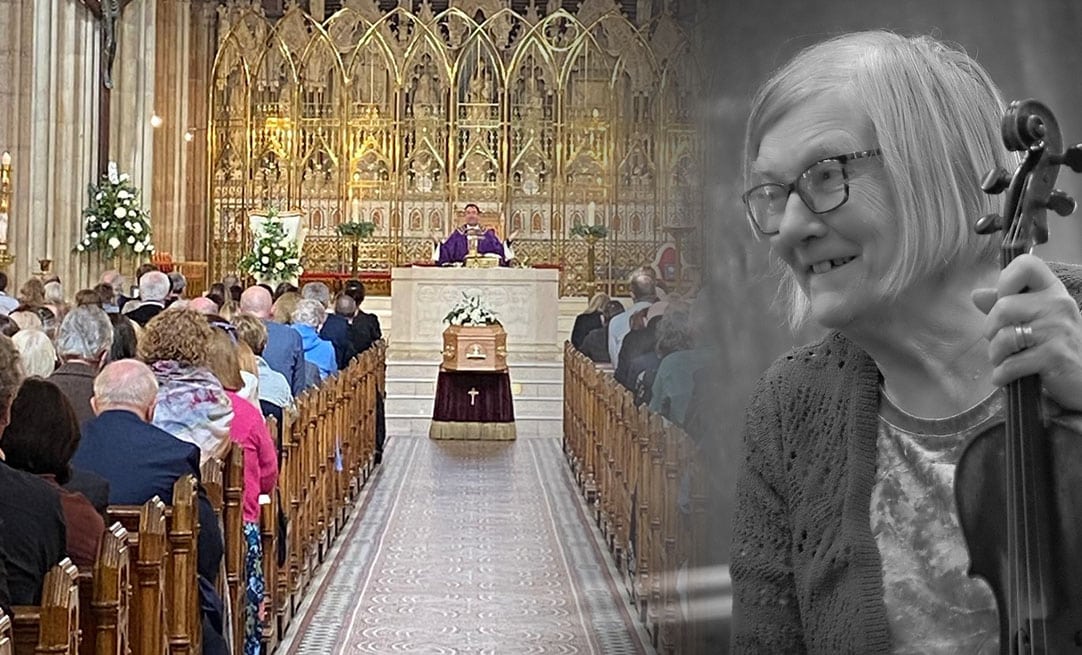
Mourners at the funeral of Armagh’s traditional music savant, Eithne Vallely have heard that “Heavenly choirs will now be learning earthly instruments”, where “every note is perfect and every harmony complete”.
Eithne tragically lost her life as result of a road traffic accident on August 21 – aged 81 sending shockwaves far beyond the county’s confines.
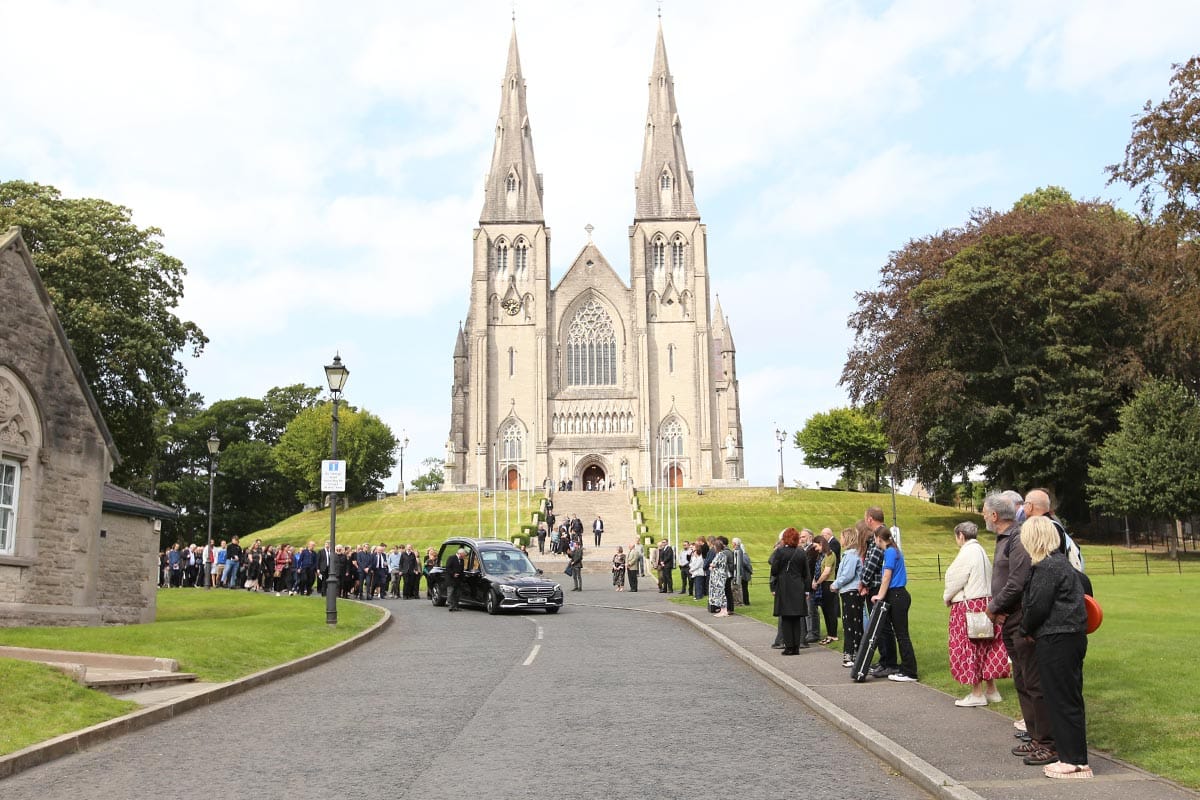
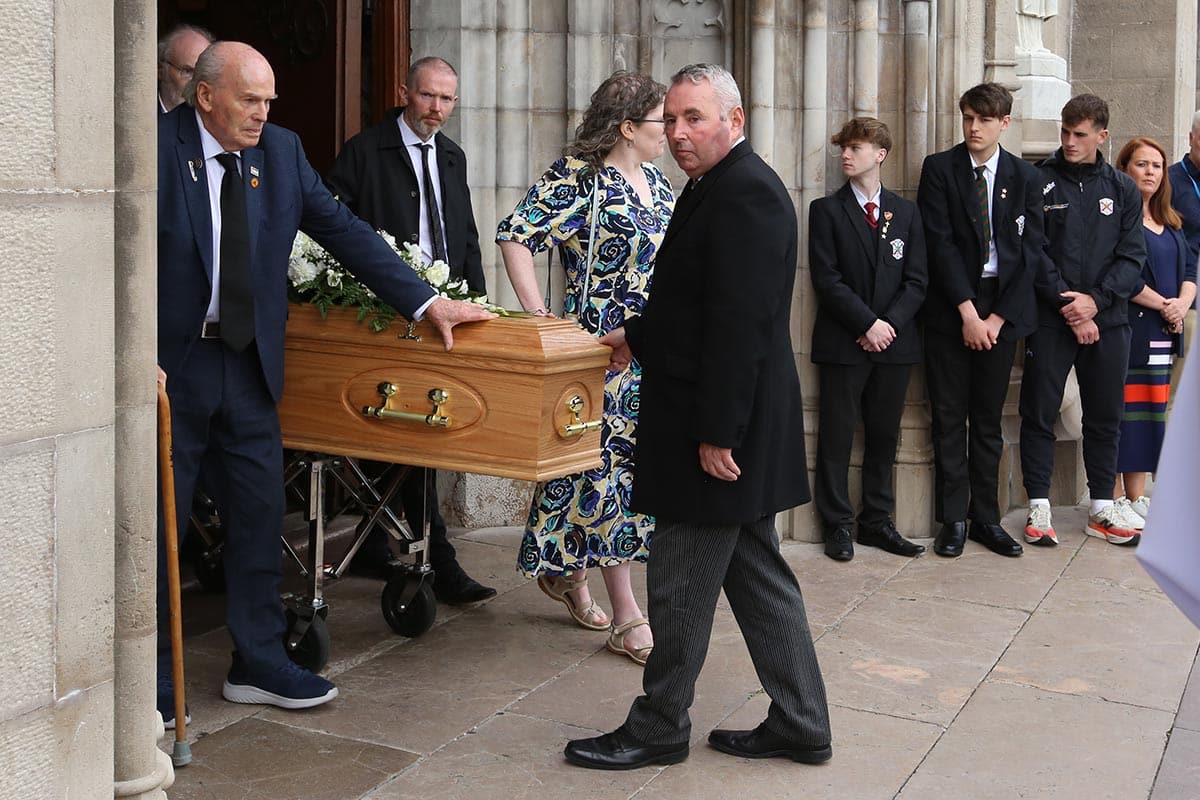
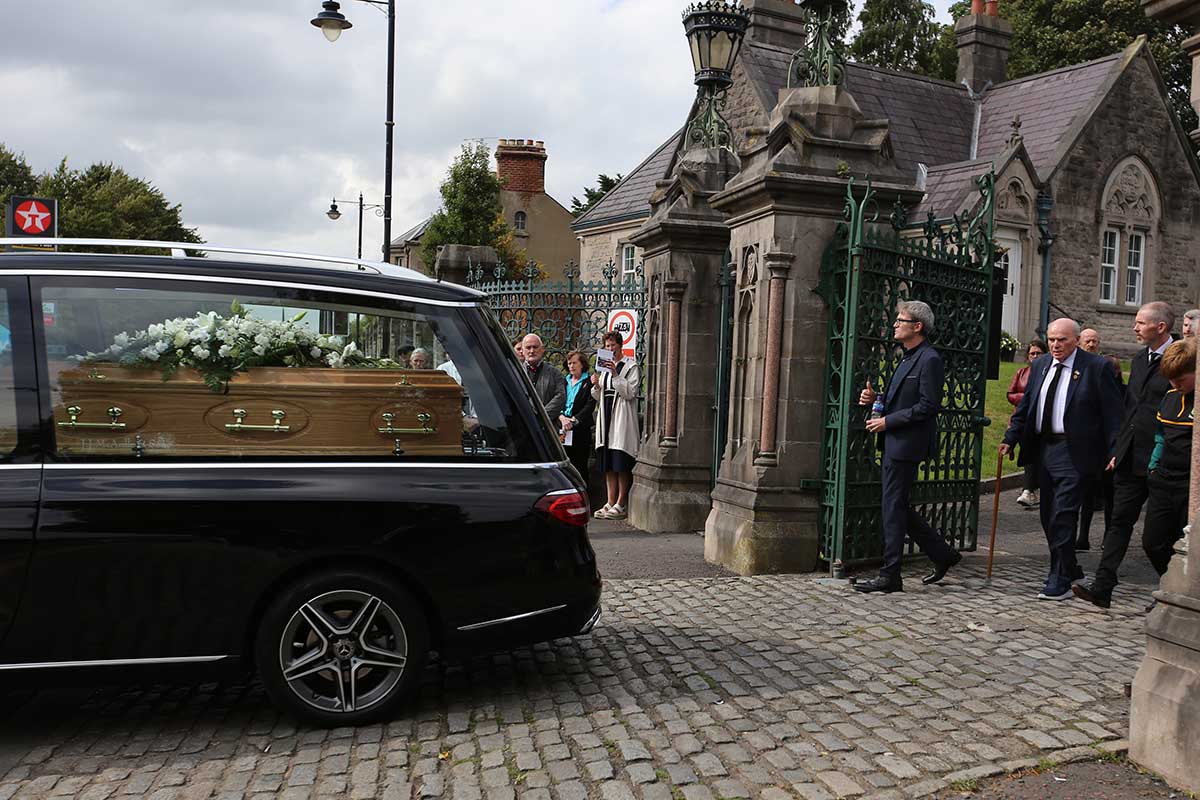
Father Barry Matthews led the Requiem Mass before a full-to-bursting St Patrick’s RC Cathedral. He was accompanied by Archbishop Eamon Martin and the Very Reverend Dean Forster on behalf of the Church of Ireland community.
Beginning the Mass, Father Matthews called forward symbols of Eithne’s life to be brought to the alter.
Among offerings, Eithne’s tutor book which was “sent all over the world” was provided, along with her famed fiddle, a family photobook, Armagh Athletics jersey and photos of her ancestral family in Donegal, the Duggans and Burns, who were “fiddle players, blacksmiths, farmers and band members.”
Father Matthews told mourners that Eithne should be remembered first and foremost as a wife, a mother, a mother-in-law, a grandmother, a sister and a friend.
He continued: “Home was such a central and important part of Eithne’s life. Her love for her family and her pride at their many achievements was always evident”.
Her daughter, Máire, had previously informed the priest of her mother’s famous rhubarb tarts and apple crumbles, “legendary and never to be bettered”.
He said, indeed, Eithne could “turn her hand to anything around the home”. She was a “gifted quilter and wonderful knitter” and even made a Carrickmacross lace veil for Máire’s first Holy Communion.
She found joy in her garden, tending to vegetables that the family were “all too happy to enjoy on the dinner plate”.
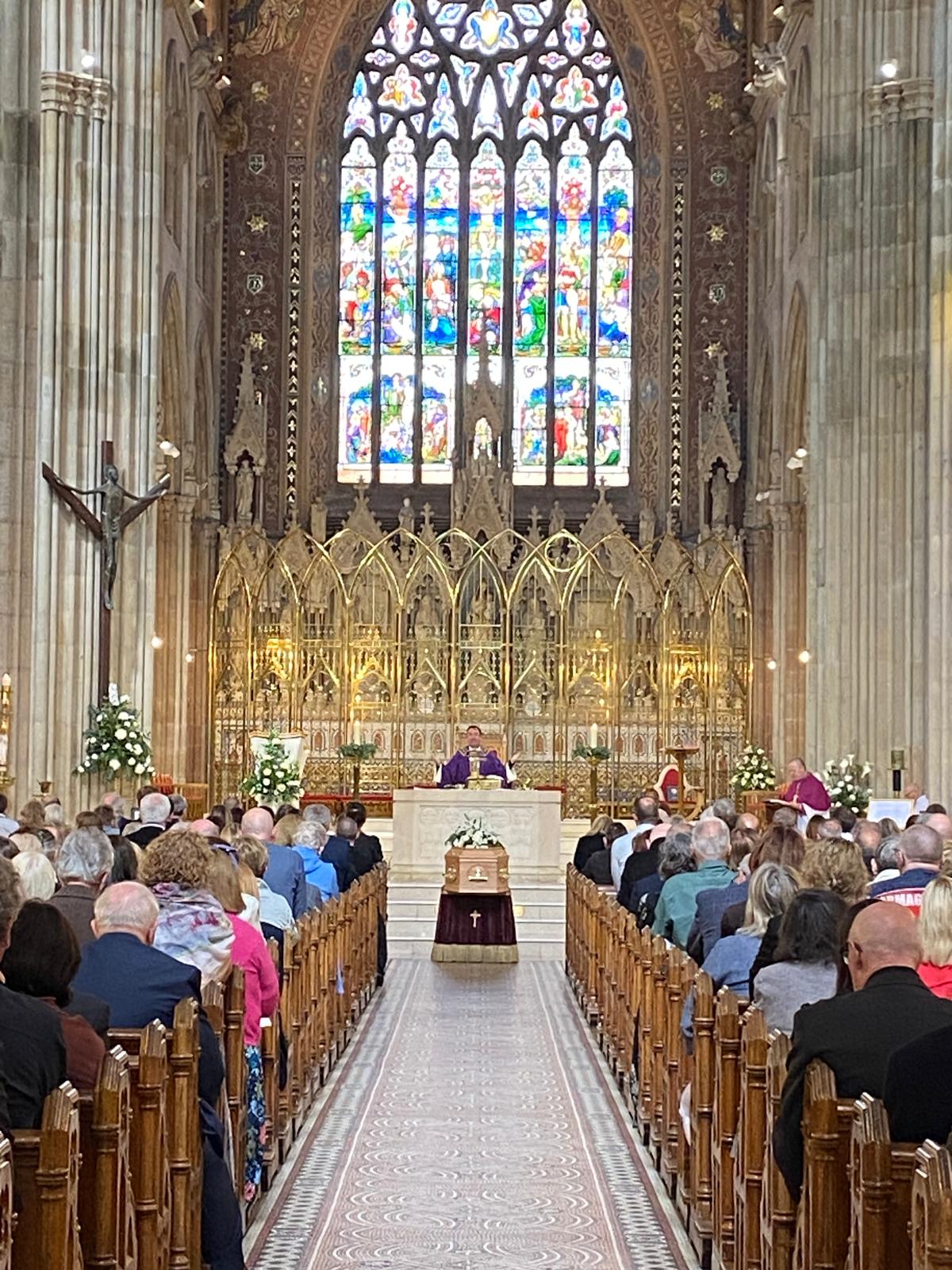
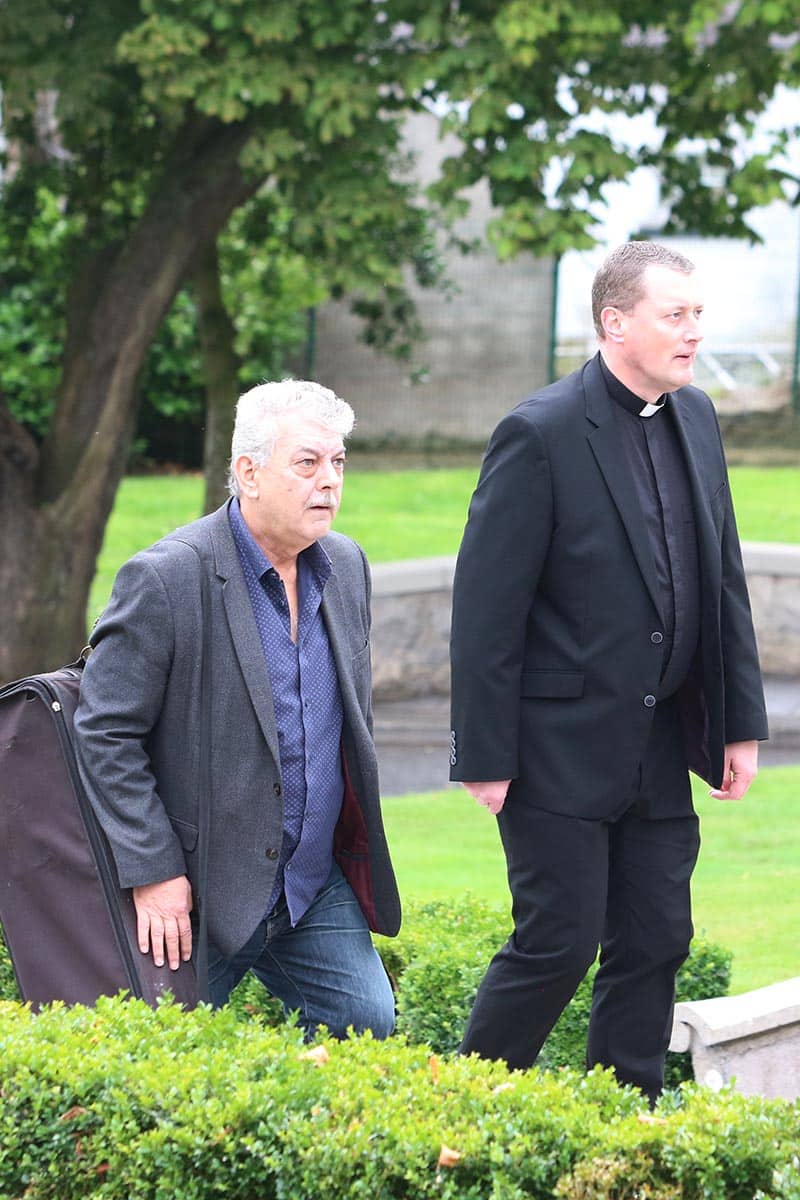
Fr Barry presiding over the funeral Mass of Eithne Vallely. Photos by Vincent Loughran
Mourners heard that family trips all around Ireland produced “prized and precious” memories, they will “hold dear forever”.
Of her life-long relationship with her husband Brian, Father Barry explained that the pair first met when in Armagh with the Dublin Pipers Club.
However, the priest said, it was over a Michael Russell reel that “they truly knew they were meant for eachother”.
“During their courtship,” he added. “Brian as a young athlete would often walk or run the whole way to Monaghan just to meet Eithne.”
They “sealed their love story” in Milford Chapel outside Lifford in 1969 and moved to Armagh in 1970 in time for their son Niall’s birth.
The priest said they were “much more than husband and wife”, together they shared a “vision, a passion and a love for music and culture that would have been an influence far beyond their own family.”
In establishing the Armagh Pipers Club together, they created something “much greater than a music club, you created a home for music, tradition and community.”
As Brian was establishing the Armagh Pipers Club, from 1969 onwards Eithne was “instrumental” in writing the tutor books, with thousands sent all around the world “enabling our muscial tradition to be handed on around the globe.”
They helped young people to “discover their identity, heritage and their place within that living tradition,” he said.
Referring to former Irish President Michael D Higgins’ tribute to Eithne this week, the priest said her cotribution to Irish music was “immense”.
Mr Higgins had presented Eithne with the Presidential Distinguished Service Award contribution to the arts in 2018. At that time he referred to her as a “national treasure”.
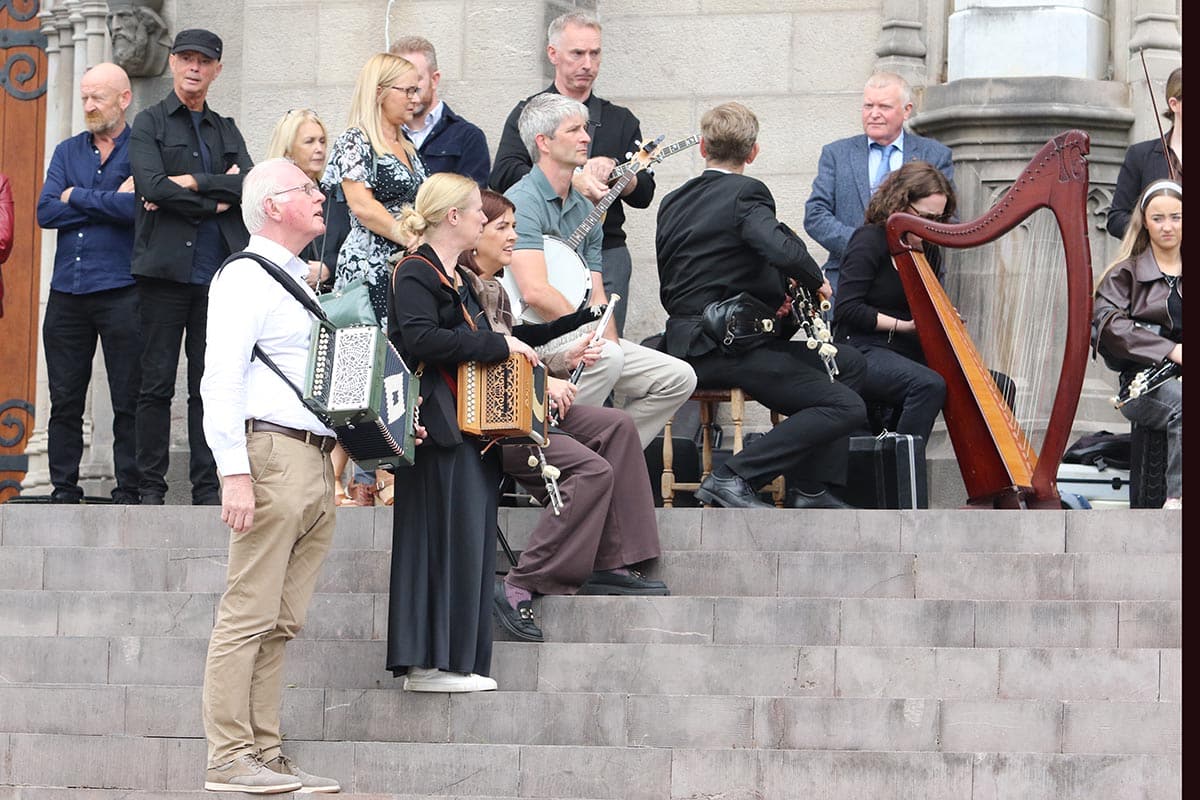
She played many instruments including the tin whistle, accordian and, of course, the fiddle.
She encouraged and inspired generations of children and young musicians, many whom she thought of as the teachers of today.
The priest said: “Her contribution may have sometimes been expressed quietly but her influence is profound.
“They say the greatest legacy any of us can leave is not something that is placed in a museum or written in a book but, rather, it is found in the lives that we have touched, in the gifts we have passed on and in the people who are different beacuse we were part of their lives.
“Today the sound of traditional music carries a deeper meaning. Every tune recalls a story, every note will carry memories. Every musician who plays will in some way continue something that Eithne and Brian began.”
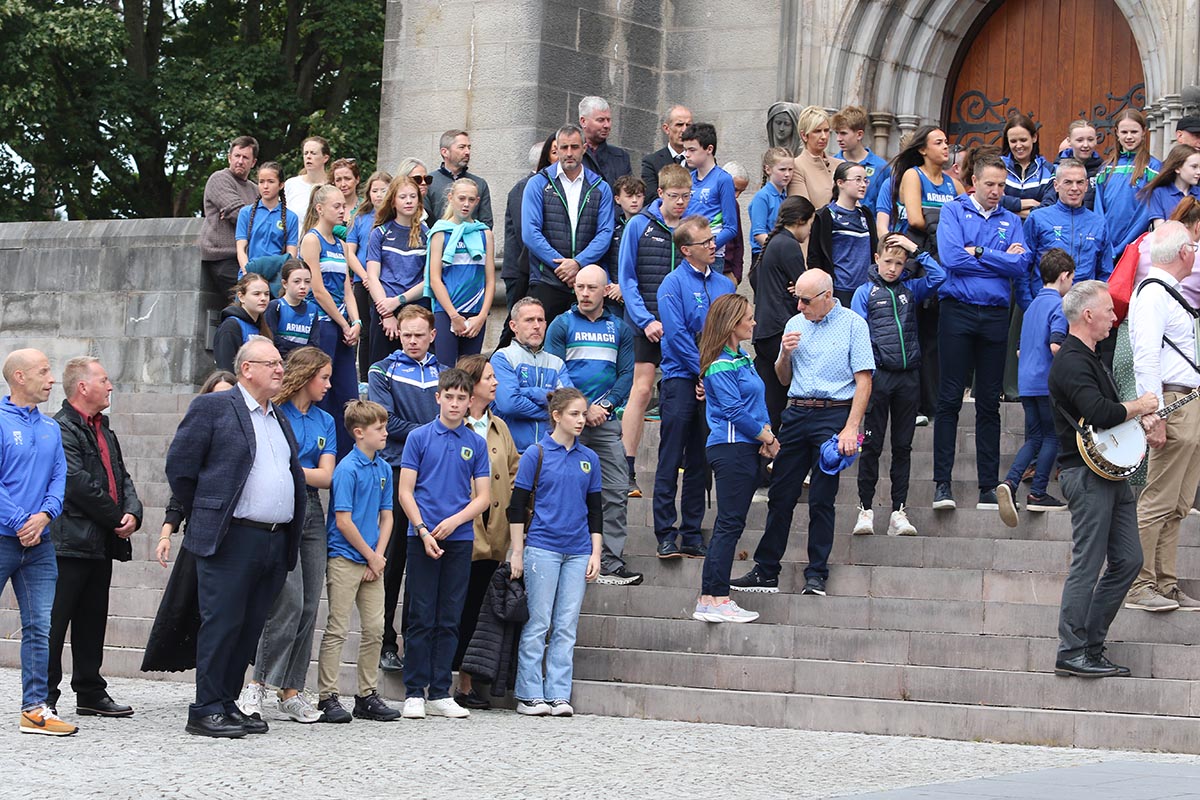
The priest spoke to Eithne’s role in helping to establish the Armagh Athletics Club with Brian and the encouragement she often gave to young athletes on the track.
He reminded mourners, “death is not the final word.”
“Perhaps today we can imagine Eithne being welcomed into the presence of God where every sadness is gone and where she is reuinted with those who she loved who had gone before her,” he said.
“Perhaps too we might imagine that Heavenly music has taken on a very special quality. The Heavenly choirs will now be learning traditional Irish music and the beat of our Gaelic sounds will now be filling Heaven.”
Poem by Lochlann Connelly: “Rembering Eithne. Rembering a great woman taken / Grey buildings and dark skies year around / Roads wet under thick cloud / And Monday nights in that town with Eithne / A consant / Dragged heels and battered cases / Rented flute and fiddle / A phrase of tune given / ‘Lovely’ we repeat / Simple / Another Monday / Eithne you were the backbone of our club / Its music a sown in seed for so many talents, lives, livelihoods / We have the tunes we need / A go-to / We might go to it together when words cannot be found / We repeat them for you.”
Most read today
PUBLIC NOTICE