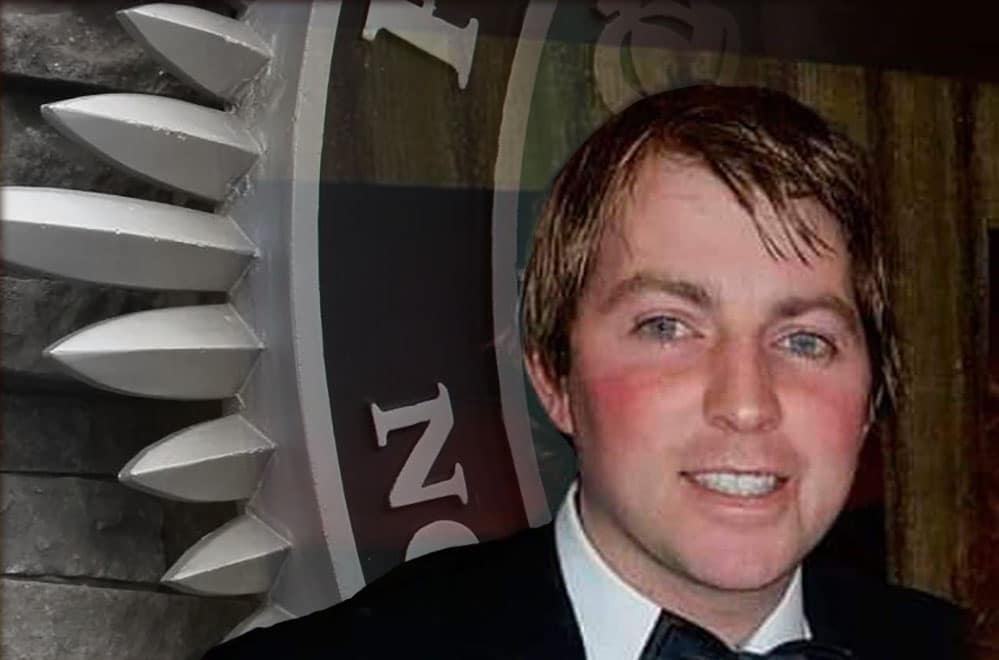
A police investigation into a 2016 indecent exposure allegation against convicted abuser Jonathan Creswell was “inadequate” and “failed the victim”, the Police Ombudsman has ruled.
Creswell, who died earlier this year while on trial for the rape and murder of 21-year-old showjumper Katie Simpson, was reported to police in January 2016 after a woman alleged he had exposed himself to her at a horse yard in Co. Antrim the previous October.
The woman later complained to the Police Ombudsman about how her report had been handled by the Police Service of Northern Ireland (PSNI).
Publishing her findings, the Ombudsman’s Director of Investigations, Nikki Davis, said: “Police failed the complainant, both as a woman and as a victim.
“Indecent exposure is a serious crime and can indicate a potential for escalating sexual offending, so it is important that reports are robustly investigated.
“We also know that sexual crime is under-reported, and that it takes great courage for victims to go to the police.
“Unless reports of sexual offences are properly investigated, victims will be less likely to come forward, offenders will remain free to reoffend, and efforts to combat violence and sexual offending against women and girls will be undermined.”
The Ombudsman’s investigation identified a series of failings in the original police inquiry.
Related: After 10 years, a failed PSNI investigation and two PONI complaints Creswell victim ‘vindicated’
The officer initially assigned to the case recorded only one witness statement in the four months she had carriage of the investigation. No statements were taken from three other witnesses, including a potential eyewitness.
A second officer later allocated to the case did not obtain any further statements, and neither officer listened to a recording of an allegedly threatening voicemail said to have been sent by Creswell.
The file ultimately submitted to the Public Prosecution Service (PPS) by the second officer was also found to be inaccurate. It stated that Creswell was known to police only for motoring offences, when in fact he had previously been jailed for violent offending against a woman. It also wrongly claimed there was no outstanding evidence and no other witnesses.
The PPS decided there was insufficient evidence to prosecute at that time, but advised that if Creswell was interviewed in future, the file could be resubmitted.
When interviewed by Ombudsman investigators, the first officer said she would have obtained the outstanding statements had she retained ownership of the case. The second officer, who was allocated the file five months after the allegation was made, said he had not been instructed to gather further evidence and believed his role was essentially one of monitoring. He also said he did not consider Creswell’s previous violent offending relevant.
Mrs Davis said: “The officer failed to provide the PPS with important information concerning Creswell’s prior convictions for violent offending. Indecent exposure is a non-contact sexual offence and a form of sexual violence, so the prior conviction was entirely relevant and should have been disclosed to the PPS.
“It is widely acknowledged that police should be looking at behavioural patterns across incidents and seeking to identify where repeat offending might indicate escalating risk. That clearly did not happen in this case.”
The Ombudsman further found that police had made inadequate efforts to locate and interview Creswell. No enquiries were made in relation to vehicles linked to him or a mobile phone number believed to be his.
Although information had been received that he might be living in Co Donegal and regularly travelling to Northern Ireland, officers did not contact An Garda Síochána to seek assistance in tracing him.
The complainant also did not receive adequate updates about the progress of the case.
Mrs Davis noted, however, that officers had attempted to contact Creswell by phone, visited an address associated with him, made enquiries relating to his equestrian background and placed alerts on police systems about two vehicles linked to him.
A misconduct file submitted to the PSNI recommended that the two officers be disciplined for failing to properly investigate the case and for not keeping the complainant adequately informed.
However, after considering the file, the PSNI decided the issues would be better addressed through measures aimed at improving the officers’ conduct rather than formal disciplinary sanctions.
Ombudsman investigators were unable to complete enquiries into a separate allegation involving a different police officer who retired during the course of the investigation. The complainant believed that officer had been trying to stop her speaking to the media. Before retiring, he stated that he had called her to advise of the intended police response to a media query and how information about the case could be reported and used.
Although the complaint was initially closed, a fresh investigation was opened after further correspondence from the woman.
In a statement responding to the Ombudsman’s findings, the PSNI said: “We note today’s announcement from the Police Ombudsman for Northern Ireland (PONI), which states that a Police Service of Northern Ireland investigation into an allegation of indecent exposure made against Jonathan Creswell in 2016 was inadequate and failed the victim.
“In this case, the actions of the officers involved did not meet the expectations of the PSNI or the victim.
“We are committed to providing a victim-centred approach, and to learn from cases where our investigative processes have fallen short.
“We will continue to co-operate fully with PONI in relation to any complaint.”
The Ombudsman’s Office has urged anyone affected by the publication of the investigation to contact Victim Support NI, whose services are free, confidential and trauma-informed. Details of their services are available on the Victim Support NI website.
Most read today


PUBLIC NOTICE