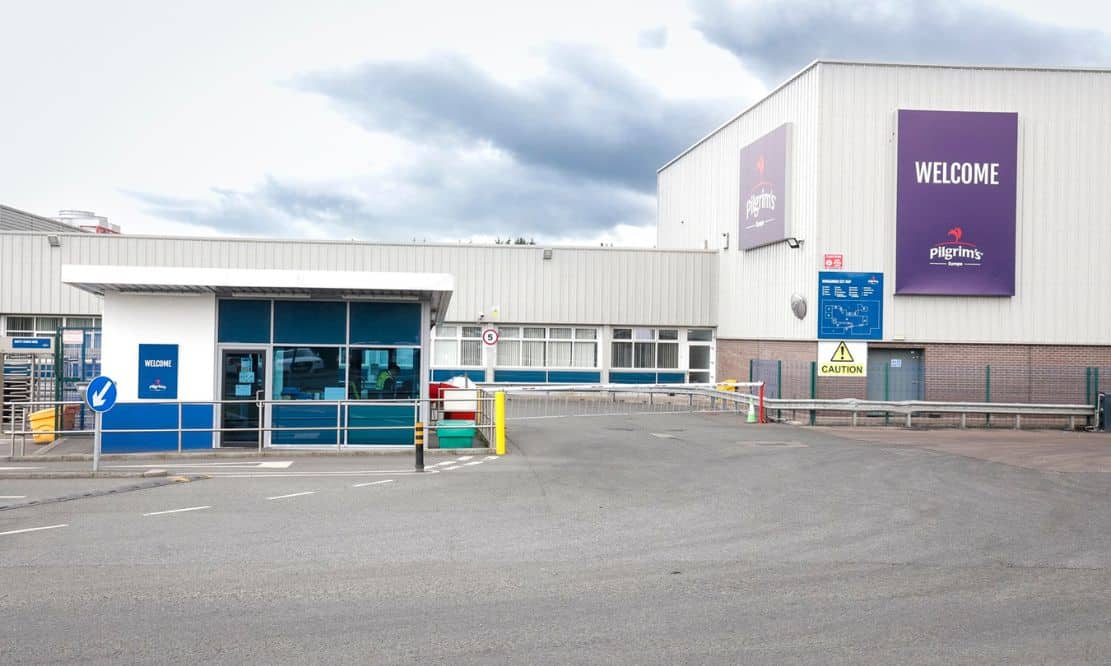
One of Europe’s largest poultry providers has written to Armagh, Banbridge and Craigavon Borough Council – alongside all 11 Northern Ireland Councils – to ask for support in “resolving delays to poultry-house planning applications” laying claim to a shared service body “overreach”.
Pilgrim’s Europe – the company behind Moy Park – wrote the letter, dated December 1, to ask for Council support and “raise concerns” about recent changes in the approach taken by Shared Environmental Services (SES) in regards to guidance issued to Councils in meeting their statutory duties under the Habitats Regulations.
Shared Environmental Services (SES) is a collaborative initiative in Northern Ireland aimed at providing environmental assessments and support to local councils, particularly in relation to planning applications and habitat regulations. It is an advisory and does not have decision-making powers.
The letter – written by Poultry Business Unit Director, Justin Coleman – said the company had become “aware of potential SES overreach in relation to the export of poultry litter to authorised facilities in the Republic of Ireland”, thus causing delays regarding decision-making on planning applications.
Mr Coleman explained: “The Department of Agriculture, Food and the Marine (DAFM) – the competent authority in the Republic – regulates these movements through Article 48 agreements, reviewed annually, with every load jointly approved by DAFM and Department of Agriculture, Environment and Rural Affairs (DAERA) and logged on the TRACES system.
“The Northern Ireland Environment Agency (NIEA) / Natural Environment Division (NED) Planning Response Team has recently signed off on current Article 48 arrangements for two new planning applications (in the Armagh City, Banbridge & Craigavon and Fermanagh & Omagh Council areas respectively) to Glenmore Generation Ltd. in the Republic of Ireland.”
Despite approval being granted for the poultry houses, the company said they “understand that SES has engaged a barrister at public expense to assess whether DAFM is sufficiently policing the onward spreading of litter or digestate in the Republic of Ireland before SES will release these applications to Council”.
“This is occurring even though DAFM, NIEA/NED Planning Response Team all agree that the proposed outlets are acceptable,” it continues.
The Pilgrim’s Europe Director expressed concern that a “shift in SES practice” was occurring while the “revised Operational Protocol is still under consultation and before any formal guidance on the new ammonia protocol, within DAERA’s competence, has been issued”.
He added: “Changes appear to be occurring without stakeholder consultation. We also understand from Irwin Carr Associates that EU regulations do not require the monitoring of emissions from manure or digestate spreading.”
Seeking support from Council, Mr Coleman put forward: “Given that SES has no statutory or decision-making powers, any assistance you can provide in clarifying its intended role, particularly in questioning the decisions of DAFM – a recognised competent authority of another jurisdiction operating fully within EU regulations – would be greatly appreciated.”
ABC Council issued a response to the multi-billion pound chicken producer on December 11, stating that their correspondence has been “shared with the Council’s Executive Management Team and leaders of the council’s political parties”, and was subsequently passed to Damian Mulligan, Head of Planning, for response.
Mr Mulligan said: “As you are aware, Shared Environmental Services (SES) was established to support councils to meet their environmental responsibilities in connection with their role as planning authorities.
“Its primary role is to carry out Habitats Regulations Assessments on behalf of councils on planning or other development applications to assess and advise on impacts on European sites (Special Areas of Conservation and Special Protection Areas) and Ramsar sites.
“This function is essential to ensure that councils fully meet their legal obligations in relation to this environmental responsibility.”
The Council official explained that SES’s decision to engage legal counsel was taken at their own discretion and “not because of any intervention by this Council”.
However, the Council has noted the concerns and will subsequently be “engaging with SES” to ensure all outstanding consultation responses are being assessed “strictly in accordance with relevant legal and procedural requirements” and are not being delayed by “unnecessary and/or immaterial considerations”.