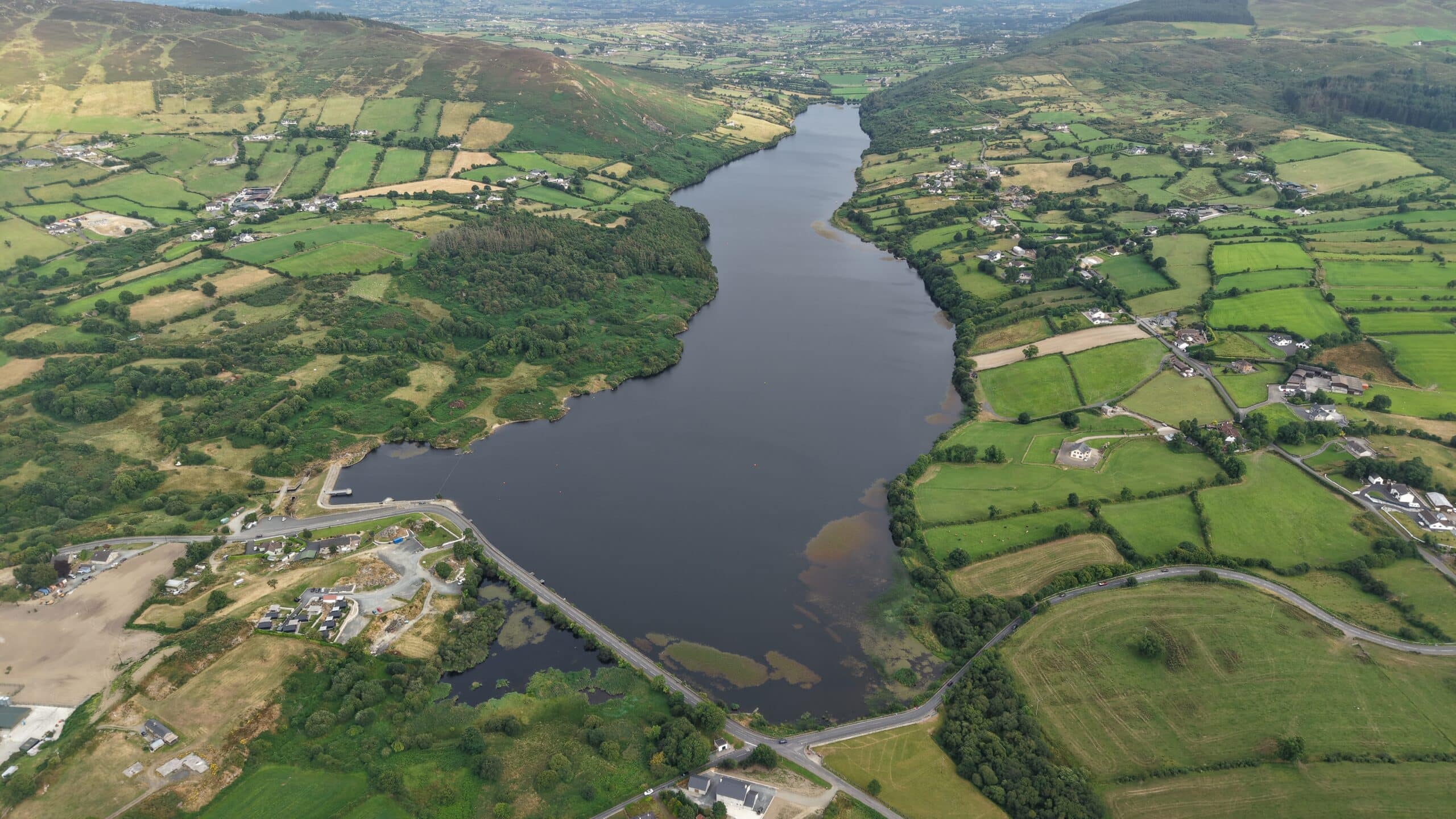
A south Armagh lake closed over blue-green algae reports has reopened in time for a major water festival amid concerns over a “flippant” Stormont App.
Newry, Mourne and Down District Council had advised people to stay out of the water for the last month over potential human health risks.
The local authority has now confirmed that Camlough Lake testing has cleared the waterway for a September festival, but a local councillor has criticised online image reporting.
Slieve Gullion Sinn Fein Councillor Declan Murphy said: “There is an App that people can use and some individuals for example could take an image of what they think is blue-green algae and report it to DAERA (Department of Agriculture, Environment and Rural Affairs).
“But the dangerous thing is that, without even doing tests, the Department will tell the council to close down the waterway for four weeks.
“We are concerned that if someone was to do that two days before the Camlough festival or any other water festival, it would have to be called off.”
According to the council, DAERA alerted it to the potential presence of blue-green algae at Camlough Lake on July 13.
The local authority then took action under a monitoring protocol to close the waterway for four weeks of toxin testing.
The councillor, who is also the chairperson of the Camlough Community Association, added: “I have now asked for the App reporting procedure to be drilled down on and make it more foolproof; it just can’t be based on a notion or a photograph without proper investigation, as it will impact on community events.
“I would have concerns at this moment in time that it is a bit too flippant the way it is being operated and have asked our MLA Aoife Finnegan to start questioning this once Stormont is back up after the summer break.
“It needs to be more efficient and accurate so that reports are done properly rather than just relying on an App.”
The DAERA website states: “Members of the public are encouraged to report suspected blue‑green algae blooms via the Bloomin’ Algae App, by emailing photographs or by phoning the NIEA incident hotline.
“The confirmed locations datasets are updated on a weekly basis, so you are able to check this on a regular basis for any changes in your area.
“A map shows the locations where visible blooms have been confirmed as blue-green algae by qualitative assessment of reports received via the Bloomin’ Algae App.”
A qualitative assessment is considered to be done by relying on human judgment and observation instead of statistical measurements.
The DAERA map shows a confirmed report of blue-green alage for Camlough Lake on July 11.
The Local Democracy Reporting Service contacted the council.
A spokesperson said: “As the criteria set out within the protocol for the removal of warning signage have now been met, the blue-green algae warning signage at Camlough Lake has been removed.
“Although Camlough Lake is not a designated bathing water under current legislation, the council, as site operator, has followed the measures set out within the Inter-Agency Blue-Green Algae Monitoring Protocol to manage the potential risk to recreational water users and those accessing the waterside environment.
“In accordance with the protocol, the council has undertaken regular visual monitoring of the lake and arranged appropriate toxin testing.
“The required monitoring period has now been completed, with four consecutive weekly non-bloom observations recorded and two water samples returning toxin results below the relevant public health guidance limit.
“The council will continue to monitor the lake in accordance with the protocol.”