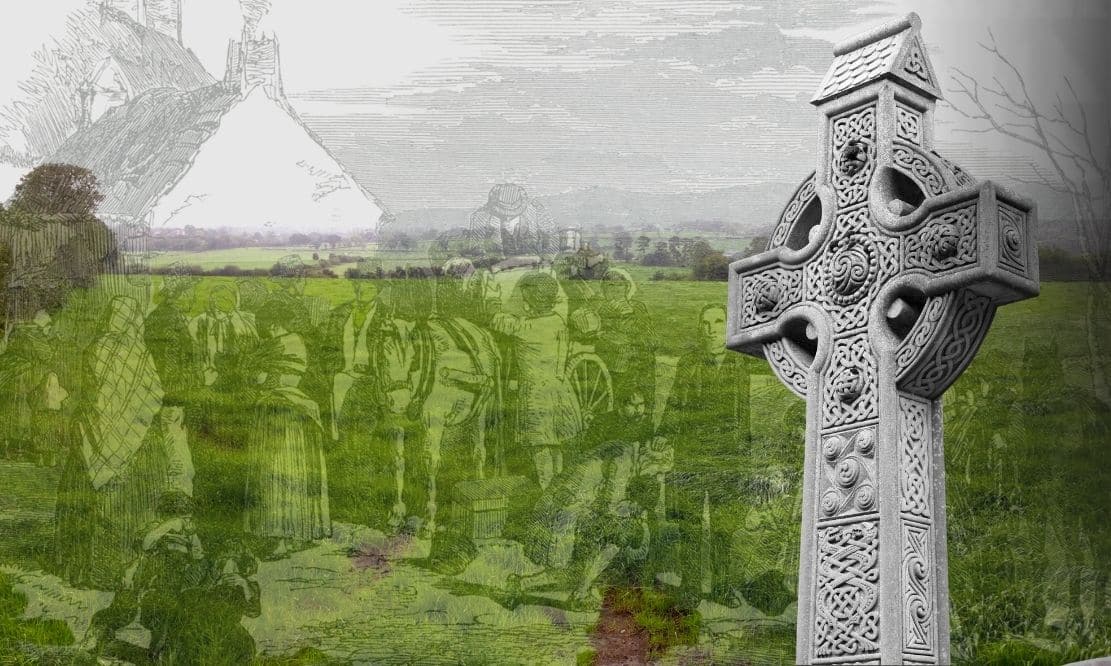
Some 3,900 miles away in St Louis, Missouri eight siblings are getting together to install a “proper” grave monument for their 3rd great grandmother who left Armagh, widowed, aged 43, with her six children in pursuit of a life of “freedom and opportunity” on American soil.
And, to install this poignant marker, they are asking for a little help from the people of her home townland, Ballybreagh… by way of a “shoebox of soil”!
Ellen Taggart McMahon was the 43-year-old widow of former tenant farmer, Andrew McMahon. In September 1853, a year after what is now generally considered the end of the Irish Famine – or ‘Great Hunger’ – she found herself standing at the Waterloo Docks in Liverpool looking for a sailing vessel, the ‘Rufus K. Page’.
Among her party were her six children, ranging in age from two to 16 years old, her cousin Margaret McMahon and two other children, aged six and 10.
To get to the bustling port, the family had already completed a 30-mile rail journey to Belfast and a 12-hour overnight ferry trip from Belfast to Liverpool across the Irish Sea.
While the distance to Missouri from Armagh is just over 3,900 miles as the crow flies, by water and rail it totalled a whopping 7,600 miles across the Atlantic ocean to New Orleans, followed by a 1,300 mile voyage up the Mississippi River to St Louis, where she made her home.
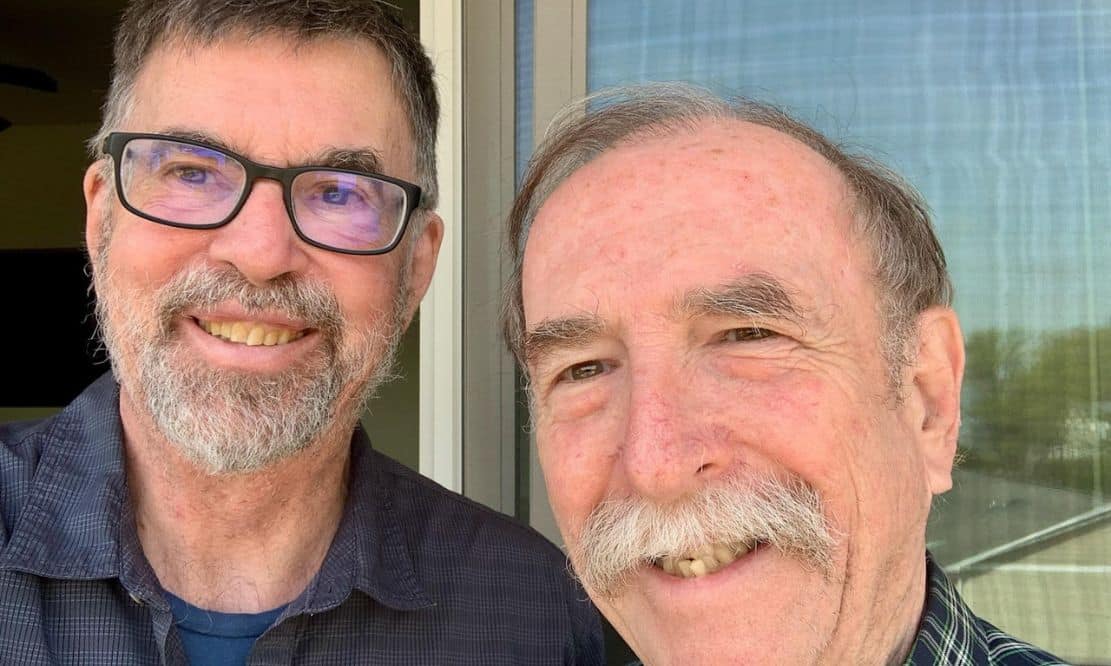
Bob and Jerry McMahon
They journeyed in steerage on the Rufus K. Page – a three-masted sailing ship – arriving in New Orleans after enduring a hurricane and a 57-day ocean journey. They also survived a yellow fever epidemic in New Orleans, before travelling via paddleboat up the Mississippi River, to reach St Louis in November 1853.
Today, her great, great, great grandson, Missourian Bob McMahon explains that while there are no first hand accounts of Ellen’s trip, it may well have taken more than 70 days for she and her family to first touch down on St Louis soil.
Bob has worked closely with his brother Gerard ‘Jerry’ McMahon to uncover the history of Ellen’s arduous journey and their ancestry in Armagh.
Explaining a little of what they know, Bob provided an essay to Armagh I which states: “It is not known exactly when (likely in the 1830s) or where Ellen and Arthur married. Their first child John was born in 1837.
“Sometime, perhaps by the early 1840s, they moved a few miles east of Armagh to the townland of Ballybreagh (Gaelic expression for ‘a place of beauty’) in Kilmore parish.”
He explained that there was one large farm on the Ballybreagh estate called ‘Wheatland’, owned by an Isabella Richardson, and leased to a Clendenning family.
It is possible that the McMahons lived and worked on Wheatfield Farm and may have held “non-agricultural occupations”, such as blacksmith, wagon driver, seamstress, cook, peat cutting and hauling, etc. for the Clendenning family.
“To supplement the family income, Ellen may have also earned income by spinning yarn or hand weaving linen,” Bob continued. “Depending on how poor the McMahons were, the oldest child John may have also worked. Until the occupation mystery for Arthur and Ellen is solved by further research, we do not know much about their financial condition when the famine began in 1845.”
Trying to establish Ellen’s reasons for leaving Armagh, Bob added: “We do know that a relative of Arthur’s, a John McMahon, emigrated to St Louis sometime before the 1853 McMahons landed in St Louis and was later employed as a teamster.
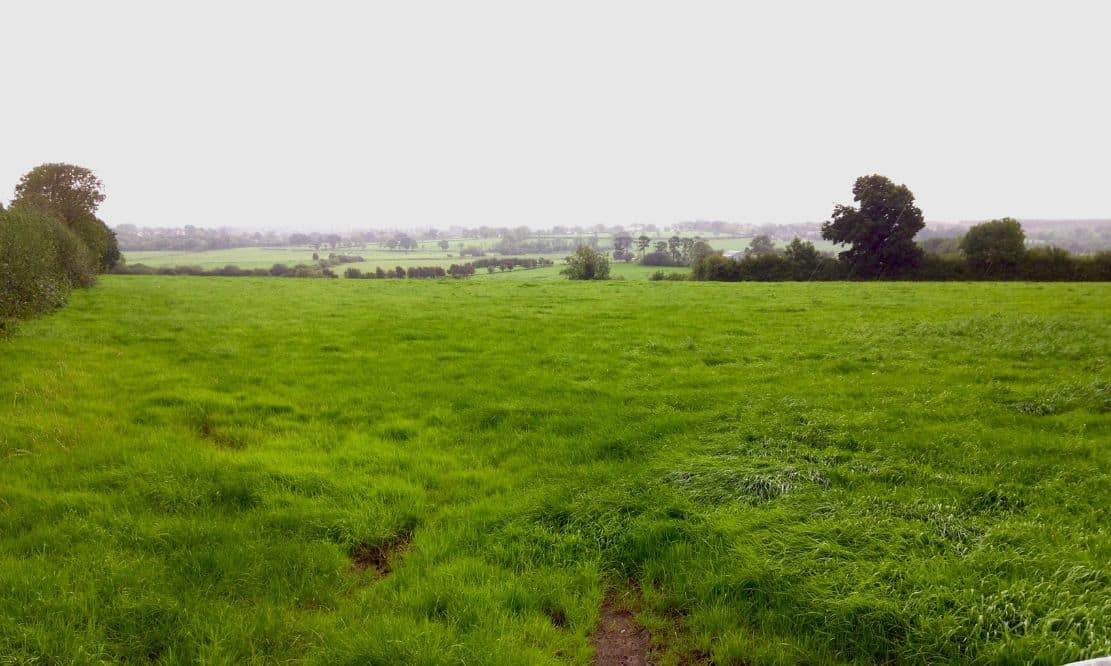
The location in Ballybreagh where the Missourian McMahon family suspect Ellen may have come from. Photo taken in 2016 by Jerry McMahon
“In the 1860 Census, at age of 40, he shows up living in the same house as Margaret McMahon. His successful emigration may have provided a crucial anchor for the 1853 McMahon group to consider emigration.”
He also indicates that the effects and aftermath of the famine may have weighed heavily in Ellen’s decision to leave her homeland. But, most crucially, the death of her husband, Arthur may ultimately have been the final straw.
Said Bob: “While we don’t have a definitive date for his death yet, Jerry McMahon speculates that it probably occurred in 1851 or 1852. Henry Arthur, the last child of Ellen and Arthur, was born in 1850 and baptized in August 1850.
“Without Arthur, husband and likely the major breadwinner for the family, Ellen probably started evaluating the possibility of emigrating sometime in 1852, perhaps in late 1852 and early 1853. She may have even talked to Arthur about this possibility before he died.
“It is not likely that she made the decision to leave after the spring of 1853 — there was too much planning to do and money to be raised for an emigration trip that got underway in late August 1853.”
Naturally, one can expect a journey of this magnitude to have a comparative cost. Bob and his family can only assume that to raise the hefty sum, Ellen may have sold off her furniture, keepsakes and belongings, taken emigration assistance from her landlord or friends and family… including John McMahon in St Louis.
Of her final few days at home, Bob said: “Ellen’s last days in Ballybreagh were probably frenetic, getting items together for the trip and tinged with sadness while bidding farewell to relatives and friends.
“To say that there were mixed feelings by relatives and friends left behind of Irish emigrants leaving for America is an understatement.
“Most relatives and friends were probably glad that those departing would be leaving for new opportunities and a better life. But everyone knew that this journey to the US was irreversible—the emigrants were likely to never to return, as the Irish said, ‘as good as dead’.
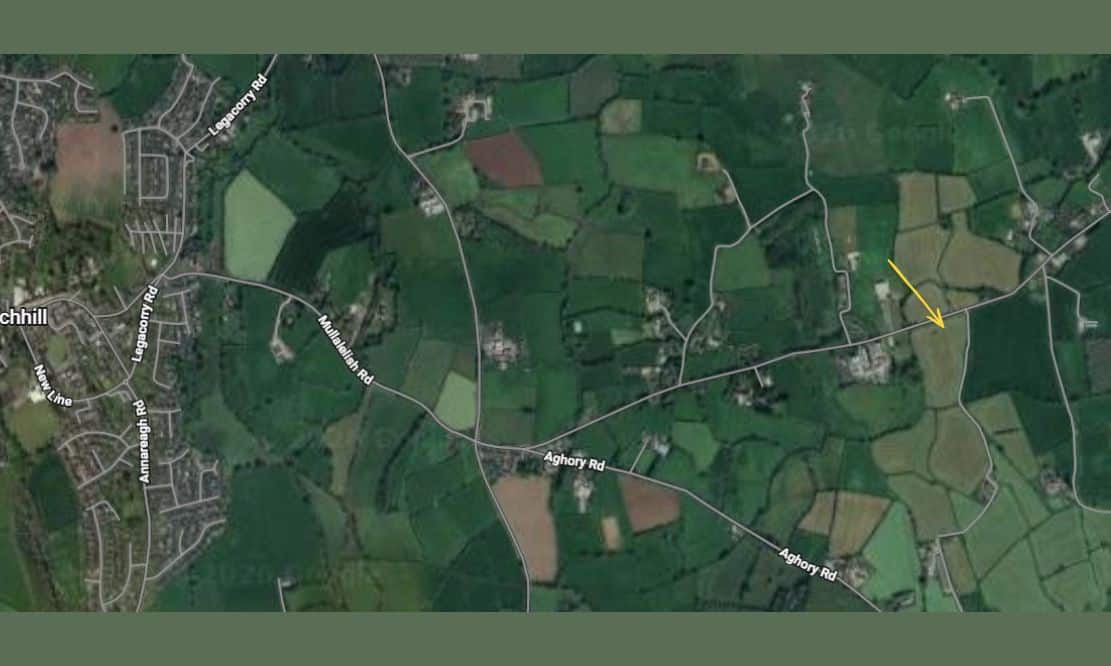
A map showing location marked where Ellen’s family may have lived
“The farewell gathering of relatives and friends on the evening before leaving was called ‘the American Wake’. For Ellen, Margaret, and their children, the evening was probably a mixture of Irish gaiety—music, dancing, and speeches—and sadness, with lots of tears flowing equally as drink.
“Early in the evening the children would be put to bed before the start of the next day’s journey. And late in the night Ellen and Margaret would say final goodbyes before falling to sleep for the last time in Ireland.”
To honour Ellen’s remarkable journey of courage and hope, he, and seven of his siblings, have agreed to install a grave monument in her honour at Rock Springs cemetery, St Louis.
They hope to erect the monument in June 2026, in gratitude for Ellen’s “courage, her resilience, and her determination to provide a future with freedom and opportunity for her children and hundreds of descendants, some of whom are buried in this lot”.
To tie her back to her Armagh roots, the family are requesting the help of a kind-hearted Armachian by way of a shoebox filled with soil from Ballybreagh.
Once received, the soil will be symbolically spread around the monument on the monument’s dedication day of June 6.
Though a simple box of soil may seem of little value, its symbolic merit cannot be measured. So keen is he to have this token of home for Ellen’s grave marker, that Bob has offered to pay for any courier and shipping fees associated.
Anyone who would be willing to provide support should contact Armagh I directly via info@armaghi.com to be put in touch with Bob McMahon to arrange delivery and logistics.