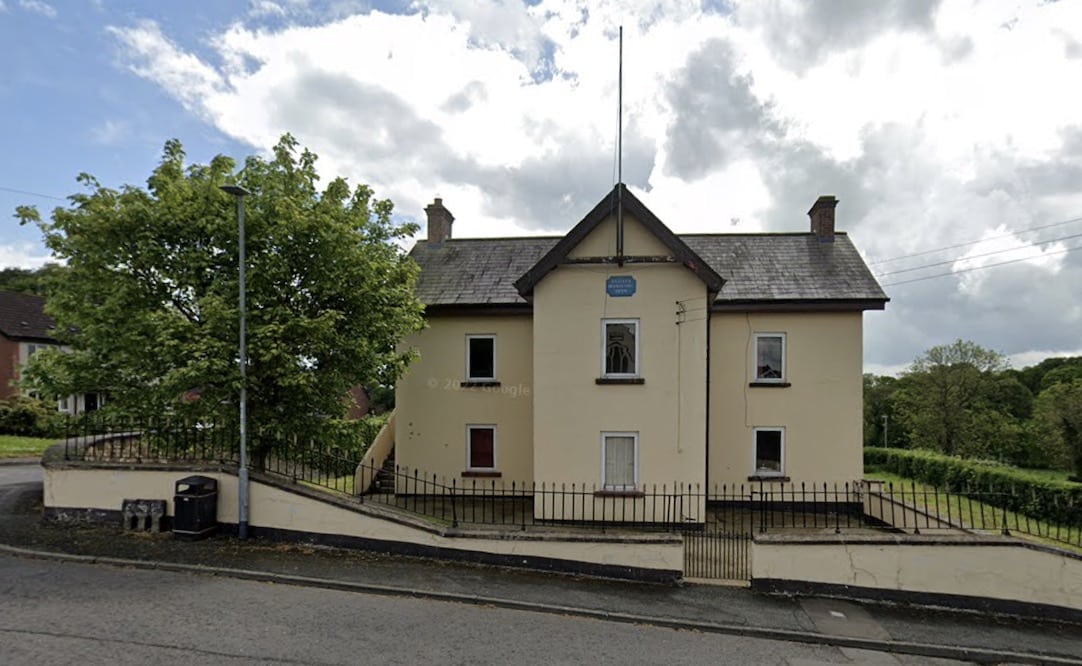
Plans to demolish Killylea Orange Hall and build a new state-of-the-art community and sports centre in its place have been given the go-ahead.
It is just over two years since proposals by KEYS (Killylea Empowering Youth Scheme) were drawn up.
Previously, the application, which had been lodged with Armagh City, Banbridge and Craigavon Borough Council, had been recommended for refusal back in November 2024.
Officers then cited various reasons for that opinion, including the loss of an area of land which represents an area of open space, that it did not take account of the character of the village or was closely integrated into the existing building fabric of the village, and did not make a positive contribution to townscape or was seen as sensitive to the character of the area surrounding the site in terms of design, scale and use of materials.
But fast forward to 2026 and the application has now been given full approval to proceed after being considered at Wednesday’s planning services committee sitting.
There was no debate surrounding the proposals on this occasion, as senior planning officer Trudy Chapman presented her report with a recommendation to approve.
The application, she explained, came before the committee as council had an interest in part of the land.
Added Ms Chapman: “The proposal seeks to demolish the existing structure on site and construct a much larger community facility on an enlarged curtilage.
“To facilitate this, a small area of existing open space to the rear of the existing property will be incorporated into the site.
“Whilst the proposed building would extend closer to nearby residential properties, officers are of the opinion that this relationship would not create an unacceptable impact on residential immunity.”
The committee was told that there were no third party representations received, and “all consultation responses were favourable”.
Officers, said Ms Chapman, were of the opinion that the proposals complied with the Area Plan and all other relevant policies.
One tree at the front of the existing Orange Hall will have to be removed to make way for the new development, she added.
DUP Councillor Alan Mulholland proposed accepting the recommendation to approve, and party colleague Councillor Kyle Moutray was there to second it.
With approval now given, the iconic building on Main Street in the village will now be demolished.
The new venue which would replace it – representing a significant investment in the Co Armagh village – would be a two-storey structure.
The ground floor would be entered, as at present, from Main Street. It opens on to a lobby, with toilet provision, as well as office accommodation and a kitchen/servery area and vending machines too.
There would also be changing rooms with showers, as well as a disabled access changing facility. Referee accommodation is included for when the centre is being used to host sporting fixtures.
And the main feature of the ground floor is a large hall boasting two courts capable of hosting a range of indoor sports.
The first floor will be accessible by both stairs and lift from ground floor. It would comprise a total of three meeting rooms, additional accessible toilets, as well as a minor hall, with seating for 20 people.
There is also plenty of storage accommodation throughout to meet the needs of the users of the new modern centre.
It will be well-illuminated, with the addition of rooflights to let in natural sunlight. And there will be solar panels too to ensure added efficiency.
It would also boast nine parking spaces to the rear, with a disabled bay to the front, next to a ramp leading into the main building for wheelchair users.
The overall floorspace available at the new venue would increase from 226 sq metres to 973 sq metres.
It was in January 2025, that the services of Paradigm Niche Consulting were employed on behalf of the applicants.
Their role was to “ascertain the viability of transforming the current District Orange Hall to become a focal community building that will serve the whole community through innovative service delivery and wider social benefit”.
It was originally imagined that any new community infrastructure should serve as a sporting, community and cultural venue for the whole community.
It was, according to the consultancy, who circulated around 800 paper surveys, an important resource.
Their report states: “Laid bare, the proximity to services data set suggests that a lot of work in terms of service development and delivery is required and the need for a suitable space for delivery is required.
“However, it is noted that the space should also incorporate a comprehensive programme for older persons as well as the appropriate space to realise any opportunities.”
More than 80% of the respondents noted that the current facilities were “not conducive to even the bare basic community needs”, while over 90% were willing to pay for services or the use of the new venue.
Respondents had decried a lack of youth club/youth activities, or anything for the elderly, while there were no sports or leisure facilities, poor rural transport and limited further educational facilities.
Among other things, the report suggested any new venue should incorporate a local community recreational hub building to service the leisure and recreational and cultural needs of the local community; a dedicated health and well-being hub, hosting initiatives in conjunction with the local health service, community and other collaborative partnerships; and a dedicated youth development hub, delivering a cost-effective facility for use by current and future youth development organisations and initiatives, working in conjunction with private daycare and the local educational trusts.
It was felt it should also facilitate elderly support organisations in provision and services in terms of combating rural isolation and marginalisation, which could take the form of a weekday drop-in centre.
It should also facilitate a community drop-in facility for young people at weekends/summer to discourage anti-social behaviour and provide meaningful and constructive social outputs.
The exact usages of the buildings will be a matter for when it is complete and various programmes and initiatives can be put in place.
But for now, the granting of planning approval, subject to a number of conditions, paves the way for work to finally begin.