The first real steps towards erecting a monument to those who died in the Great Famine in Lurgan are finally being taken – seven years after a notice of motion calling for such a memorial was first debated.
For now Armagh City, Banbridge and Craigavon Borough Council’s wish to recognise and remember all those who perished looks set to materialise, with expressions of interest sought.
The project has reached the pre-qualification stage and gone to tender in the hope of commissioning an artist for a monument to the Great Famine, which claimed the lives of over one million people.
There is already a painted tribute to the victims of the Great Famine within a Lurgan housing estate.
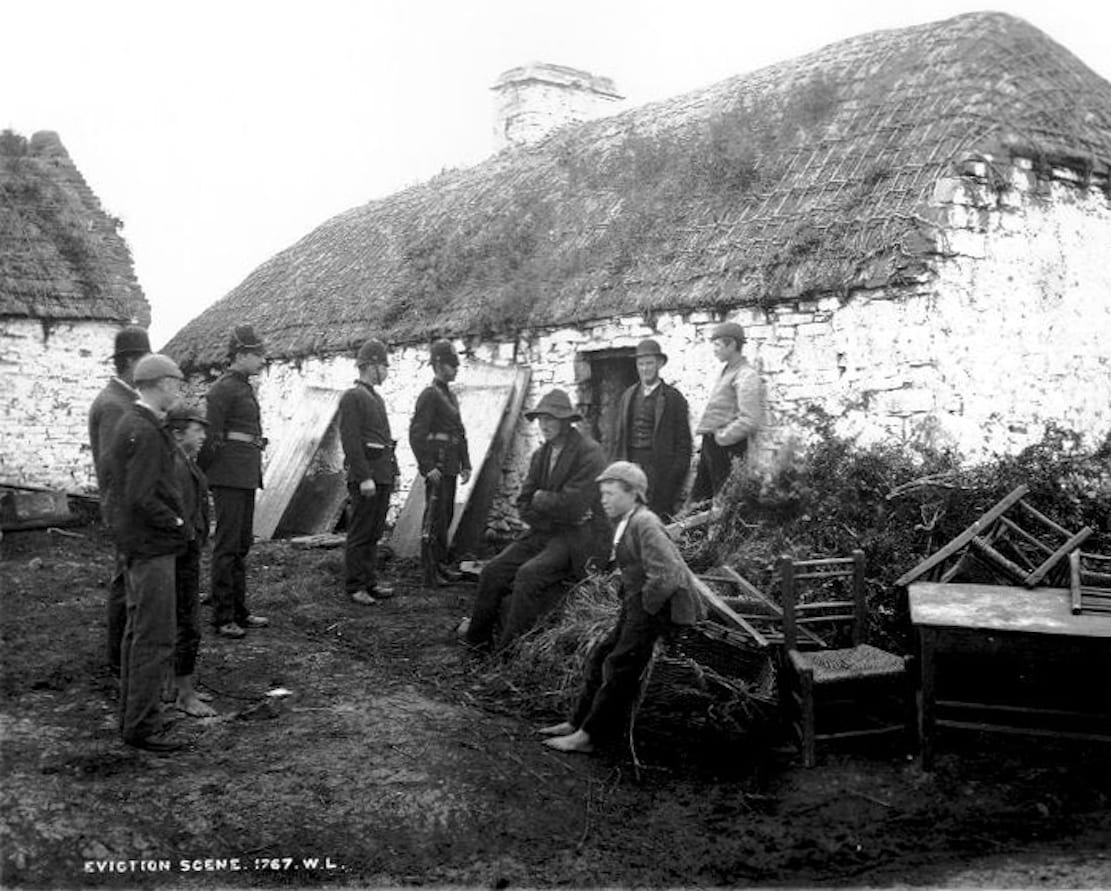
The Great Irish Famine was a period of mass starvation, disease and emigration that impacted Ireland from 1845 to 1852, caused by potato blight.
The Famine resulted in deaths of an estimated one million people and emigration of up to two million more, leading to a significant long-term population decline.
It is estimated that Ulster lost 15.7% of its population.
And, at the time, analysis of workhouse deaths in early 1847 showed that mortality levels in the Lurgan Union Workhouse were the highest in Ulster.
When Sinn Fein Councillor Liam Mackle brought his notice of motion to the Civic Centre back in March 2019, he sought a permanent memorial to the many, many victims in Lurgan.
Speaking at the time, he said the town, as a centre of linen manufacture and heavily populated, was particularly badly impacted by the Great Famine, adding: “Historians have highlighted the high death toll in the Lurgan Workhouse where, at the beginning of 1846, as many as 95 people were dying each week.
“These deaths are commemorated on a mural in Mourneview Estate.
“Many of those who died are buried in unmarked graves in Shankill Graveyard.
“After speaking to local historians we feel that it is time that there was a permenant monument to those hundreds from Lurgan who died during this period.”
In September last, ABC Council launched a public consultation, holding a meeting and listening to feedback. All were asked to offer their views and share how they felt lives lost could be best commemorated.
Lord Mayor Stephen Moutray said they wanted to ensure the memorial “reflects the impact of the Famine in Lurgan and surrounding areas”.
“Feedback from the public will be vital in shaping the commemorative monument to mark the devastating impact of the Famine, which ravaged huge swathes of Europe in the mid-1840s, following the failure of potato crops,” he added.
Local community and voluntary organisations had also been urged to step up and have their say.
Now that feedback has been considered, the local authority has taken a step towards securing an “experienced and suitably qualified artist or design team” to craft this special piece.
The goal is to produce a “high-quality permanent monument and interpretive panel to recognise the impact of The Great Famine (1845-1852) in the town of Lurgan”.
The memorial will in fact consist of an actual monument as well as an interpretative panel.
According to tender documentation: “The options, size, scale and materials will be considered as part of the artist’s commission with the preferred option and final designs being agreed and signed off by the Steering Group.
“The monument, which will include an interpretative panel – text for interpretative panel to be agreed with steering committee and will be provided at Stage 2 of this procurement exercise – may be incorporated into the monument or separate but complimentary in design.”
The deadline for submissions was on Wednesday and the overall contract is for an estimated 12-month period.
When finally agreed and completed, the new monument would be located within the Plaza at Lurgan Town Centre, a fitting memorial and a focal point for locals and visitors alike.