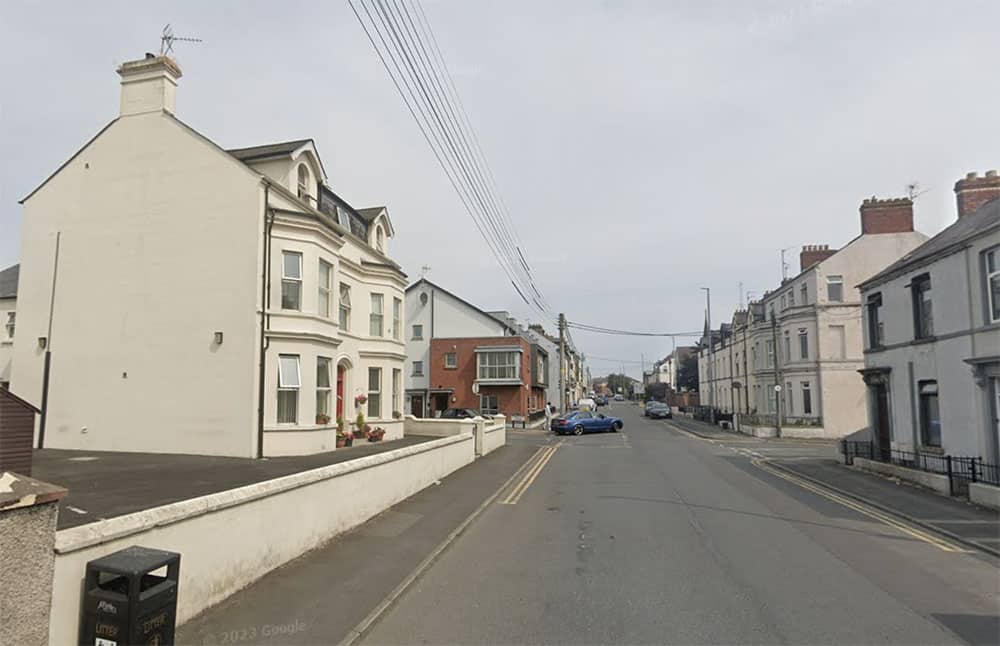
Since Armagh I began looking into the issue of licenced and unlicenced HMOs in the Co Armagh area back in August 2025, there remained some ambiguity about the actual process of applying for an HMO licence and planning permission for HMO approval.
It became a sort of what came first scenario… the licence or the planning application? Could a licence be granted without planning consent for change of use? If so, what were the conditions?
These questions came to light after 24 properties were identified in the county with licences but no planning applications were evident on the NI Planning Portal.
Within the list there were two properties in Armagh city, one on Castle Street and one on Abbey Street; one in Fairgreen Park in Keady; one in Hillside Avenue in Hamiltonsbawn; one in Sleepy Valley, Richhill; one on Laurelvale Road, Tandragee; one in Carnreagh, Craigavon; one in Spelga Park, Lurgan; and 16 properties in Portadown with seven of those on Thomas Street.
There was also one additional Thomas Street property which has been granted approval for HMO use on the planning portal that did not appear on the HMO licence register.
However, answers to those seemingly straight forward questions were not easy to find.
It was made even more complex given that responsibility for HMO administration lays with the NIHMO unit within Belfast City Council, but policy for licence applications and submission of licence applications is governed by each of the 11 individual councils.
The NIHMO also has the power to investigate improper HMO activity across Northern Ireland.
In April 2019, licensing laws for shared flats and houses changed, transferring responsibility for HMOs from the NI Housing Executive to local councils.
Confusing?
So, this publication asked the simple question… Can you get an HMO licence without having submitted a planning application for change of use with local council?
Eventually, we got the answer… Yes, you can.
Related: One address from list of 24 HMOs in ‘grey area of legal operation’ immune to enforcement
According to a spokesperson within the NIHMO unit, there are a number of matters that must be taken into account by council when considering an HMO licence application.
Essentially, the following “tests” must be met before a licence can be granted: The breach of planning control test (new applications only); the fit and proper person test; the management arrangements test; the overprovision test (new applications only); the fitness for human habitation test and the suitability of the accommodation test.
According to the unit, in considering applications for a new HMO licence, the council “may only grant the licence if satisfied that the occupation of the living accommodation as an HMO would not constitute a breach of planning control”, noting that planning permission for residential use is “not sufficient”.
It adds: “An applicant can demonstrate there isn’t a breach of planning control by either providing planning permission for HMO use or by providing a Certificate of Lawful Use or Development (CLEUD) if the property has previously been used as an HMO.
“There may be exceptional circumstances in which the Council will accept other evidence which proves that the occupation of the living accommodation as an HMO would not constitute a breach of planning control.
“The evidence should be sufficient to satisfy the Council that the property has been in use as an HMO for a minimum of five years.
“Therefore any evidence submitted by an applicant must be sufficiently precise and unambiguous.”
Related: Two more alleged HMOs investigated by council with one deemed ‘dwelling where care is provided’
Evidence that would be considered can include (but is not limited to) the following documents: Tenancy agreements; contracts with any managing agents; other statutory/regulatory approvals; surveyor’s reports; insurance certificates; photographs; utility bills; invoices and sworn statements from landlords, tenants and agents.
An important stipulation outlines that a breach of planning control “cannot be taken into consideration when considering a renewal application”.
An application to renew the licence must be made before the licence ceases to have effect as any application received after the expiry of the licence is a “new application”.
However, back in August when Armagh I contacted ABC Council for clarity on the 24 properties under consideration, a spokesperson explained: “Any proposal to change the use of a property to an HMO is likely to require planning permission.”
It therefore seems unlikely that more than 20 properties would have been exempt from needing to submit an application for planning approval.
However, the Council confirmed their Planning Enforcement Team would investigate “any allegation that an HMO is operating without planning permission” and where that is found to be the case, “an appropriate course of action will be taken”.
Council have since returned to this publication with their findings on three of the addresses which were provided among the list of 24.
Those three have all been determined to be unenforceable due to reasons as outlined by the NIHMO unit above.