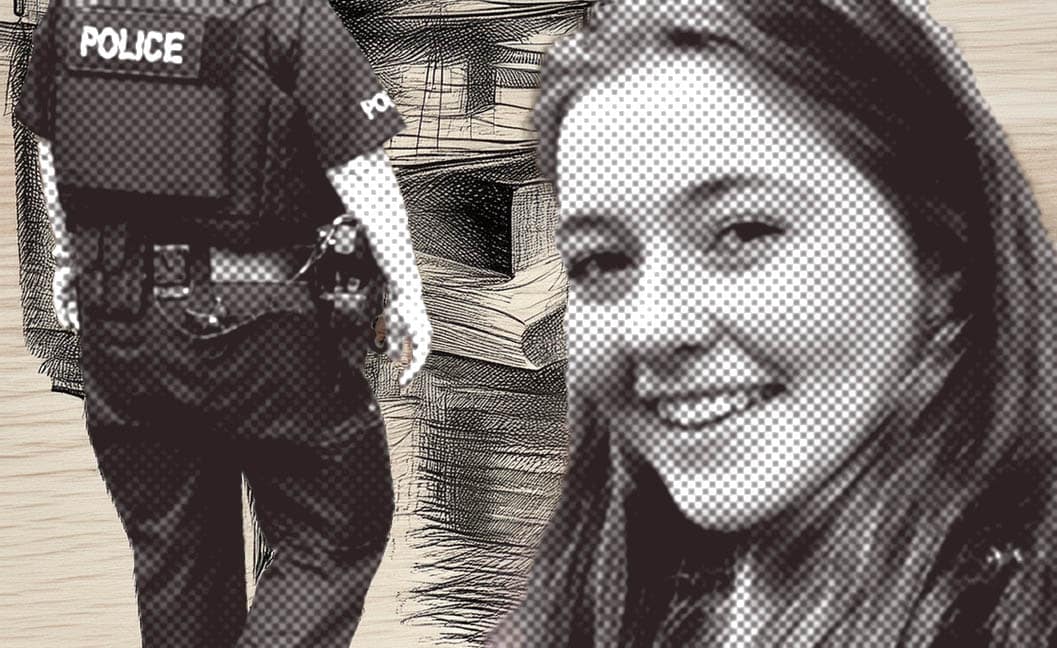
Police missed repeated opportunities over more than a decade to stop serial abuser Jonathan Creswell before the death of Tynan showjumper Katie Simpson – then allowed him to control the narrative of her final hours, a damning independent review has found.
The 21-year-old former Royal School Armagh pupil, described as “bright, funny and fearless”, died in August 2020 after being found in what Creswell claimed was a suicide attempt at the Derry home where she lived with him and her sister.
But the 270‑page Katie Simpson Review, by independent safeguarding expert Dr Jan Melia, concludes Creswell subjected Katie to years of grooming, coercive control, sexual, physical and financial abuse – and that her death bore all the hallmarks of a staged homicide disguised as suicide.
It also lays bare “profound” failings by the PSNI, health trusts and safeguarding bodies, and warns that institutional misogyny and victim‑blaming allowed a dangerous predator to “hide in plain sight” in the rural equestrian community.
The review finds Creswell began grooming Katie when she was just 10, after she started riding at a yard near her family home in Tynan, where he worked and was known locally as her older sister’s boyfriend.
Over the next decade he isolated her from friends and family, removing her from GCSE classes and controlling where she lived and worked.
He constantly shouted at and degraded her, calling her a “slut” in front of others. He physically assaulted her – including being seen beating her with a riding crop. He monitored her phone and movements, demanding she return to the yard when with friends. He subjected her to sexual abuse and rape, having groomed her from childhood.
He also forced her into financial dependence, taking her wages, accessing her bank accounts and coercing her into loans for his horse business.
The report concludes Creswell “stripped away her autonomy until she was trapped in a state of domestic servitude” under a “brutal regime of grooming, coercive control, verbal degradation, and physical abuse”.
At least 37 other women and men have since come forward to allege abuse by Creswell, many of them young riders at the start of their equestrian careers.
Katie attended A&E repeatedly between childhood and 2020 with head trauma, facial injuries, fractures and soft‑tissue damage – often blamed on horse falls.
In 2017, aged 18, she suffered a serious spinal fracture and was in a back brace, yet appeared in A&E again just 38 days later with a facial injury after another alleged kick from a horse.
The review says her injury pattern – roughly once a year and increasing in severity – should have triggered concern. It also highlights how no child protection or adult safeguarding referrals were made by hospitals, despite multiple presentations.
In one incident, teenage Katie was returned home as a stowaway from a ferry to Scotland, and that generated no social services referral – a “missed opportunity to safeguard Katie”.
Dr Melia concludes the absence of any safeguarding response to the repeated injuries is “a red flag” and “highlights the urgent need for change” in how services track and respond to patterns of harm.
The report is scathing about the PSNI’s handling of both Creswell’s long offending history and the initial investigation into Katie’s death.
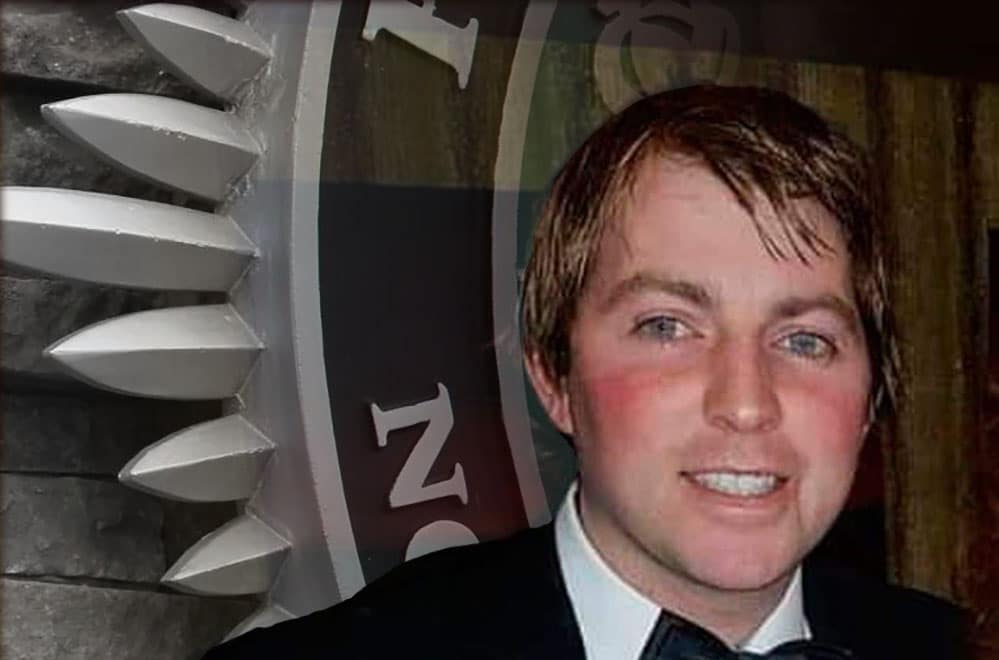
Jonathan Creswell
Creswell’s 2010 conviction for multiple assaults on ex‑partner Abigail Lyle – including non‑fatal strangulation and threats to kill – was clearly recorded on police systems, yet was not properly checked or factored into risk assessments. Despite that conviction being a qualifying domestic violent offence, he was never referred into the Public Protection Arrangements NI (PPANI) and no violent‑behaviour flags were added to his record – a “missed opportunity” to monitor and manage his risk.
A 2016 indecent exposure case, reported via Police Scotland, was allowed to collapse. PSNI never contacted An Garda Síochána despite knowing Creswell was living in Donegal, did not link the case to his domestic abuse history and failed to arrest him. The Police Ombudsman has since upheld the victim’s complaint.
Across a decade there was also a trail of dangerous driving, fleeing from officers, distressed horses in defective lorries, and a disputed horse sale that met the threshold for theft under the Theft Act. These were each treated as isolated “civil” or minor matters rather than part of a pattern of offending.
On Katie’s death, Dr Melia finds the initial PSNI investigation was “fatally undermined” by officers assuming suicide from the outset after accepting Creswell’s account “at face value”. They failed to secure key scenes – her home, her body, Creswell himself and her car – as potential crime scenes, despite obvious suspicion.
Work at the house in Gortnessy Meadows amounted to a brief body‑worn video “walk‑through”, with no detailed examination of the staircase banister, bathroom or other areas later found to contain blood traces. Katie’s car, which Creswell drove away from the scene after being told by police to go straight to hospital, was seized but not forensically examined for many months, even after he claimed she hit her head on the roof on the way.
No one seized Creswell’s clothing from the morning of August 3, 2020; those clothes were later washed and have never been recovered. Doctors noted extensive bruising on Katie’s body and per‑vaginal bleeding, and nurses were concerned enough to request an evidence bag for her underwear. Yet police neither photographed her injuries nor treated the bleeding as possible sexual assault evidence.
Key witnesses were sidelined. Paramedics were not interviewed on day one. Katie’s parents – her legal next of kin – were never spoken to at the hospital. All early police contact was with Creswell and Katie’s sister, which allowed him to dominate the narrative.
Neighbouring CCTV, which later proved crucial in showing Creswell had returned home, showered and changed – and that a female friend arrived and placed a large bag in her car boot – was not properly reviewed at the time. Meanwhile, repeated, detailed warnings from a nurse, journalist sources and family friend Paul Lusby about Creswell’s controlling behaviour and suspicions around the “suicide” were logged then effectively parked. In one case, the officer’s notes of a lengthy meeting with Mr Lusby were later shredded.
The review echoes the Police Ombudsman’s separate finding that the investigation was “flawed” and that the Simpson family were failed. Dr Melia describes the policing response as “a profound failure… characterised by missed red flags, weak leadership and a culture of misogyny and complacency that marginalised Katie Simpson”.
Drawing on international research into “concealed femicide”, the review notes Katie’s case matches all six common indicators where a partner murder is disguised as suicide: she was young and apparently in good health; her death was presented as suicide; she had recently begun to distance herself from Creswell and had started a new relationship; he had a known history of domestic violence; she was found in her own home; and she was “discovered” and reported by the perpetrator.
Dr Melia concludes that confirmation bias set in early. Once officers accepted Creswell’s story, “they saw and heard what they were looking for”, filtered out contradictions and failed to follow obvious lines of enquiry.
Throughout, the review points to what it calls “institutional misogyny” inside policing and wider systems.
Officers interviewed by the Police Ombudsman were found to have described Creswell as a “bad boy” or “philanderer” rather than a violent perpetrator. Misogynistic stereotypes – the “jealous girlfriend”, the “unstable young woman” – were deployed by Creswell in his own accounts and, Dr Melia says, too readily echoed in professional thinking.
Katie’s lived experience and character – a dependable, hard‑working young woman who was excited about her future – were never meaningfully explored in the early investigation. “She was effectively erased from her own murder,” the report states.
“Every time we blame a victim, it excuses violence, silences survivors, and allows abuse to continue,” Dr Melia writes, warning that victim‑blaming has become “systemic… produced and maintained by social, institutional and community structures, not just individual attitudes”.

The report also criticises the lack of child safeguarding.
No welfare checks or social services referrals were made for the two children living in the house with Katie and Creswell after the incident, even though it is possible they witnessed or were exposed to violence in the home. Earlier, in 2014, when police saw Creswell flee a defective horse lorry with a teenage girl – believed to be Katie – and three distressed horses, there was no follow‑up, no animal welfare referral and no attempt to identify or safeguard the girl.
Dr Melia says children exposed to domestic abuse, coercive control and sudden death must be treated as victims in their own right, not just bystanders.
The review is equally blunt about the culture in parts of the equestrian world.
It says Creswell benefitted from a “charm offensive” and a yard culture where bullying, shouting and authoritarian behaviour were normalised as “just part of the sport”. After his 2010 domestic abuse conviction he simply returned to work with children, without any AccessNI checks, safeguarding training or monitoring. He exploited unregulated yards and freelance roles where no governing body oversight existed.
Many people in the local riding community saw or suspected abusive behaviour but did not report it, some believing it was “none of their business”, the report notes.
Dr Melia calls for mandatory safeguarding policies, training and vetting in all equestrian facilities, including unaffiliated stables and livery yards. She urges the creation of clear reporting and whistleblowing routes for grooms, young riders and parents, and a joint NI‑wide safeguarding push involving bodies on both sides of the border, including Horse Sport Ireland, Showjumping Ireland, Pony Club, the British Horse Society, PSNI, Gardaí and DAERA.
“Katie was at risk from the moment she stepped through the yard gate,” the report warns.
After Creswell was finally charged with Katie’s murder in March 2021, he was referred into PPANI and initially assessed as a Category 2 risk. Later disclosures from Katie’s sister Christina and others revealed horrific abuse over many years, and he was briefly escalated to the highest Category 3.
By late 2022, however, despite multiple pending trials for serious sexual and violent offences involving other alleged victims, he was downgraded to Category 1 – meaning no ongoing multi‑agency management. The review brands that decision “very concerning”, saying it leaned too heavily on apparent compliance with bail conditions rather than genuine reduction in risk. It notes that “grooming by compliance” is a known tactic used by high‑risk offenders to reduce scrutiny.
It also questions bail decisions that allowed him to live in Derry, close enough to encounter Katie’s aunt in a supermarket, where he told her “I didn’t do it” and, according to her, warned “just you wait for the outcome”. Some family members experienced low‑level intimidation by people linked to Creswell during the bail period.
Dr Melia urges that bail decisions in domestic and sexual violence cases put victim and family safety “front and centre”, and says coercive control and serial offending patterns must be explicitly factored into PPANI and bail risk assessments, even where there is no current relationship.
While six officers faced misconduct proceedings over the early investigation, only one received a written warning; several retired before proceedings concluded.
Dr Melia is clear this is “less about individual officers’ actions and more about our organisation not getting things right from the outset”, echoing the wording of the PSNI’s own apology. She calls for an overhaul of sudden‑death procedures so that un‑survivable injuries and “non‑natural” deaths are treated with the same rigour as homicides, including mandatory attendance by an experienced detective.
She wants research‑based “concealed homicide” indicators hardwired into every sudden‑death checklist, and mandatory, refreshed training on coercive control, non‑fatal strangulation, bias and victim‑centred practice across the service. Stronger discipline and whistleblower protections are also needed when officers raise concerns and are ignored, she says.
In a heartbreaking family foreword to the report, Katie’s mother Noeleen describes the night her daughter died, how Creswell sat with them at the hospital as the “suicide” narrative was “planted” in their minds, and how she later noticed finger marks on Katie’s arms, pulled hair and unexplained marks on her legs.
“I find it hard to read this report,” she writes. “So many things were missed, not done properly, and it felt like there was a lack of care for Katie from the police.”
She adds: “Some days, I do not believe Jonathan Creswell is dead. I do not believe this is the only justice Katie will receive… He acted as though he is above the law, and it is deeply troubling to think that such corruption can occur. But he is not above God’s law. That is the only thing that gives me hope, that justice will come for my daughter.”
Dr Melia concludes bluntly: “Katie Simpson was let down at every step.”
Her report makes 16 headline recommendations – from hardwiring coercive control into every sudden‑death inquiry to forcing the equestrian sector to clean up its act. Whether those changes are delivered, she says, will determine whether Katie’s death “was not in vain – and whether others are better protected from such harms in future”.