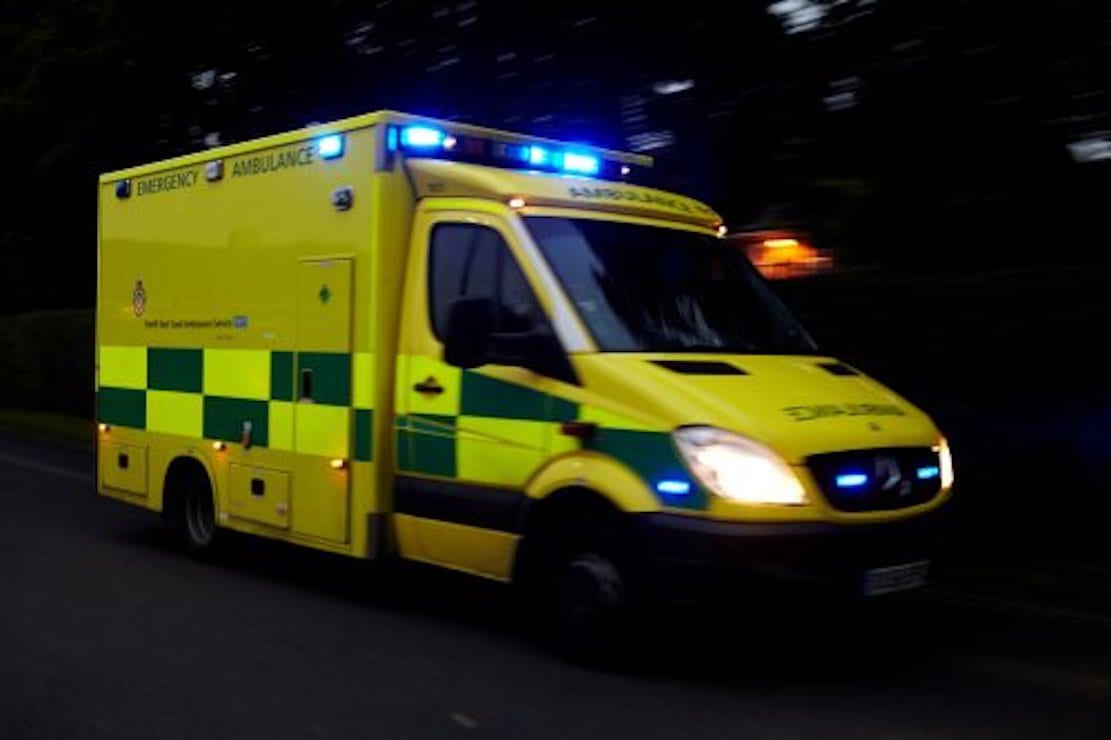
Ambulance times have been labelled “scary” as a council hears of a stroke patient giving up after a four hour wait.
The Northern Ireland Ambulance Service presented a report to Newry, Mourne and Down District Council this week identifying key “facts and figures” for 2025/26.
It was shown that the average response time to life threatening Category 1 illness calls in the district is the slowest in NI at just over 17 minutes 30s, with Category 2 such as a stroke being second slowest at more than 1hr 35mins.
Rowallane DUP councillor Jonathan Jackson said: “The main feedback I would get from constituents on the ground is obviously about response times.
“I suppose the fear with people is Category 2 illness getting worse to a Category 1 and a person is still waiting on an ambulance Some of the feeback I have had on waiting times for an ambulance is scary.
“What measures can be done to improve that?”
The NIAS report further shows Belfast has the quickest response to Category 1 at just over 8mins with the slowest for Category 2 being Ards and North Down at 1hr 56mins.
In terms of strokes the NHS ‘Act FAST’ campaign was launched to raise awareness of the early warning signs of a stroke and to stress the importance of calling 999 immediately at the first sign of any symptoms.
According to the NHS every five minutes, someone in the UK suffers a stroke.
Rowallane DUP councillor Callum Bowsie added: “I had a constituent who’s father had a stroke a few months ago.
“They rang for an ambulance and two hours later it still wasn’t there. They asked for an ETA and were told it would be another two hours.
“During that time that person could have taken their father to the hospital instead of wasting four hours. They ended up taking him in themselves and thank fully they got him in just in time.
“Not sure if it is normal to give out ETA, but could it be done so families can take their loved ones to the hospital instead of unnecessary delays.”
NIAS south area manager Joanne Maguire responded: “I take the point on times.There are call backs from the control room to check on a patient’s condition and the hope would be if needed they will be recategorised and that will increase the response time.
“As you said and quite rightly some of the response times have been scary. We have seen such a marked improvement since the release to rescue.
“We also have Category 1 release with all the hospitals and ED will release a crew if Category 1 is in the area.
“I am going to be honest and say I am not sure about giving out ETAs and could not comment on the individual call, but calls can be recategorised.”
NIAS south east area manager Rebecca Steele added: “If we are under periods of high demand there can be escalations…and some include ETAs.
“There are so many parameters to that, but there are things that will trigger an ETA. We will endeavour to get out to a patient, but when there are different categories, that’s when it becomes challenging.”