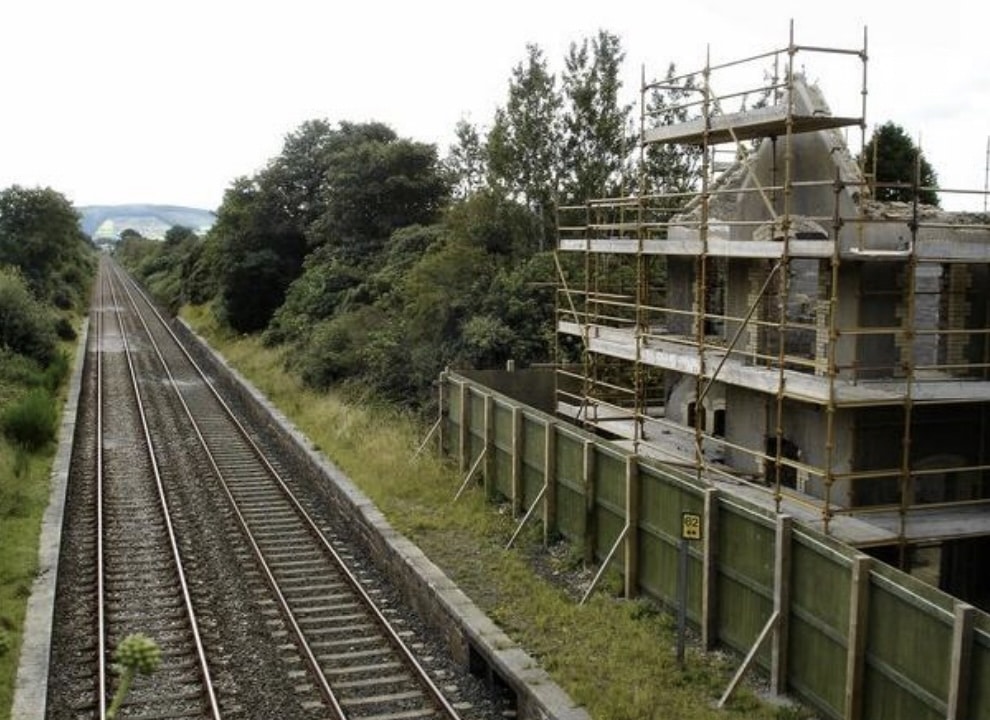
An historic south Armagh railway station with a troubled past is to be saved from total dereliction and converted into a house.
Heritage experts have welcomed the move, after the redevelopment was given the go-ahead by Newry, Mourne and Down District Council.
It’s now full steam ahead for Adavoyle Railway Station, with the applicant, having been given the official nod, able to keep his future vision on track.
Adavoyle, at Station Road, Killeavy, had a relatively short life as a functioning railway station, opening in 1892 and closing just 41 years later in 1933.
But it is what took place there in the intervening years which catapulted it into the headlines in Ireland, across the UK and right around the world.
For a train carrying British troops from Belfast to Dublin, where they were to journey on to Holyhead, was targeted by an IRA unit.
A detachment of the 10th Royal Hussars, along with their horses, were en route by rail when their passage was intercepted. Ten carriages were derailed.
That was June 24, 1921, a day which left four military men – returning from the opening of the new Northern Ireland Parliament – dead, along with 80 of their horses.
A farmer and railway guard were also killed in the crossfire which followed on the Great Northern Line, between Newry and Dundalk.
Many more were injured.
The Illustrated London News described it as ‘A Diabolical Outrage: The Royal Escorts Train Blown Up’, while the big and bold headline in the Evening Telegraph screamed: ‘Disaster to Troop Train near Newry’.
Three years later, Adavoyle was also the train station from which Eamon de Valera was deported back to the Free State. Arrested by the RUC in Belfast for having illegally entered Northern Ireland, the future Taoiseach was returned to Dublin, quietly and away from the limelight, via Adavoyle.
The station, therefore, has a notable place in Irish history.
But over the years, it has fallen into a complete state of disrepair.
Now what remains will form the basis of a new house after plans for a change of use were passed.
Planning officials had consulted with the Historic Environment Division, who assessed the application and “welcomed the reuse of this historic industrial heritage building”.
And the planning case officer reported: “With regards to the proposed development, the application focuses on a change of use of an existing vacant railway station to a dwelling.
“The proposal also incorporates works to the site to create an area for parking and amenity space for the use of those residing in the dwelling.”
It was considered that the works would not affect the Area of Outstanding Natural Beauty and therefore was “wholly appropriate”.
While not a listed building, the train station was described as “longstanding” with “unique characteristics”, in the form of yellow engineering brickwork detailing to windows and door openings.
The report adds: “There is an extension associated with a lobby which is small in scale, size and ridge. Given it will be incorporated into the restoration of the proposed existing building – and is deemed sympathetic to the existing building and proposed development – case officers are content with this proposed extension.
“There is also a first floor balcony to a bedroom facing onto the railway track with a yard beyond the railway. Given the intervening development and separation distance from the closest neighbouring dwelling, case officers, on this particular occasion, are satisfied that the balcony is acceptable.”
The Newry-based applicant will now be notified of council’s decision and allowed to proceed, subject to a small number of conditions.